From Monks to Machines: A Historical Cost Comparison of Book Copying vs. Modern Photocopiers
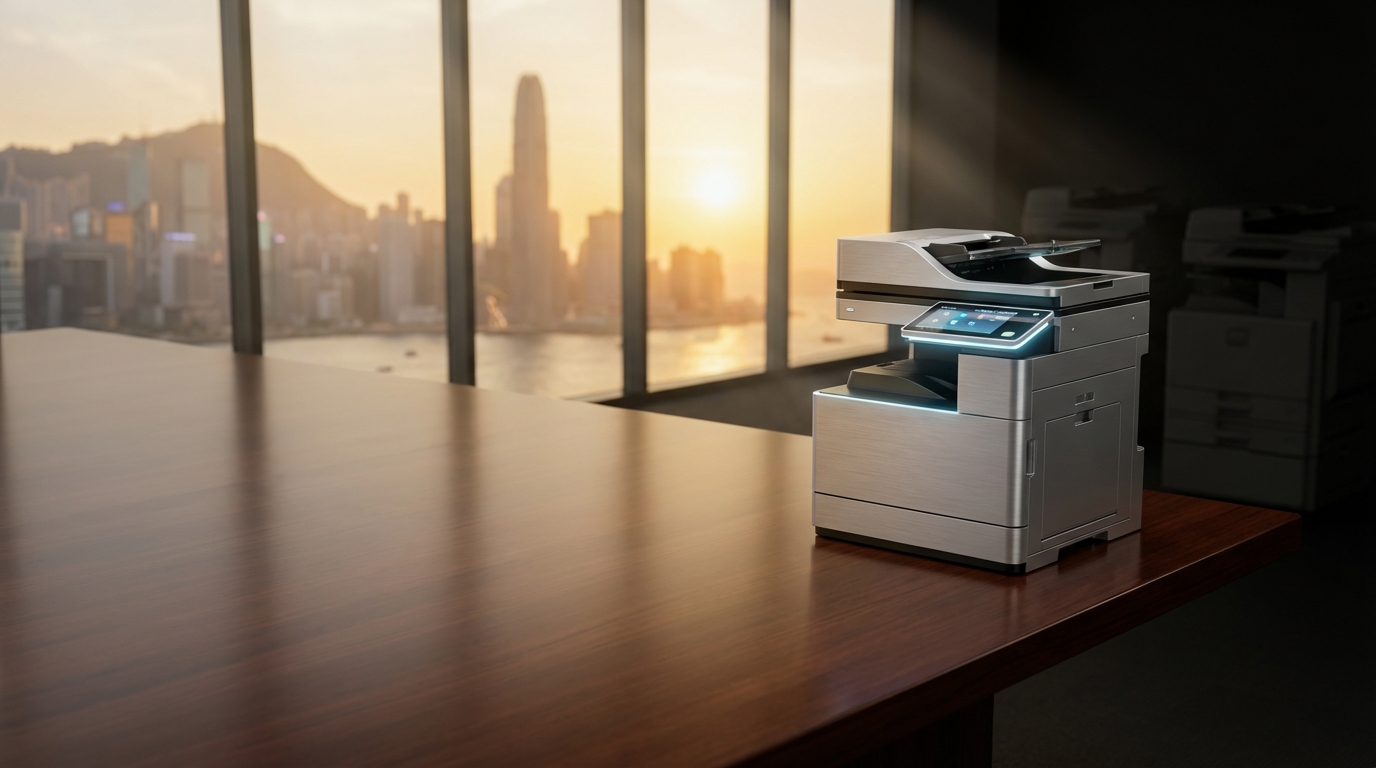
Imagine walking into your bustling office in Central or Kwun Tong, stepping up to a sleek FujiFilm or Canon multifunction printer, placing a 50-page document into the automatic document feeder, and pressing "Copy." Within 60 seconds, a perfectly collated, double-sided, high-resolution replica sits in the output tray. The cost? A fraction of a Hong Kong Dollar.
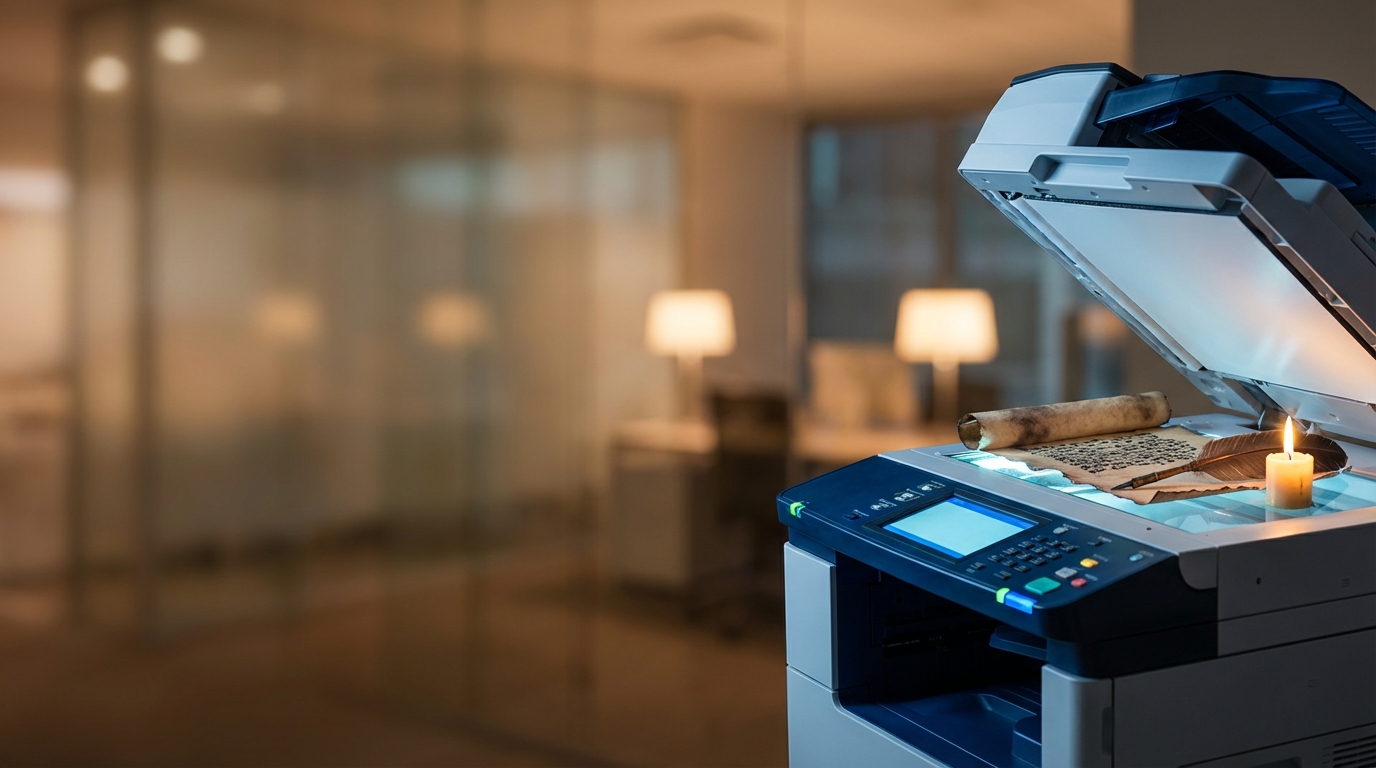
For the modern Hong Kong business owner, this is an everyday expectation. But if we rewind the clock, the act of copying information was once the most expensive, labor-intensive, and exclusive process in human history. The journey from medieval monks painstakingly transcribing texts by candlelight to the modern marvels of xerography is a fascinating tale of technological evolution and plummeting costs.
In this article, we will take a journey through time to compare the historical costs of duplicating information—from hand-copying manuscripts to the highly efficient, space-saving copiers that power today's fast-paced Hong Kong enterprises.
Era 1: The Scriptorium – Human Photocopiers of the Middle Ages
Before the invention of the printing press, every single book in existence had to be copied by hand. This task fell primarily to monks working in a scriptorium. The "hardware" consisted of a quill and a desk; the "consumables" were iron gall ink and parchment or vellum (animal skin).
The True Cost of a Hand-Copied Book
Let's break down the economics of copying a standard 400-page manuscript in the 14th century, translated into modern terms:
- Speed: A skilled scribe could copy perhaps 2 to 3 pages a day. A 400-page book would take roughly 6 months of continuous, back-breaking labor.
- Materials: Creating enough vellum for one large Bible required the skins of up to 250 sheep.
- Labor Cost Equivalent: If we value a skilled worker's time today at a modest HK$20,000 per month, six months of labor equates to HK$120,000 just in "wages."
When you factor in the exorbitant cost of materials (gold leaf for illumination, rare pigments like lapis lazuli), the cost of producing a single copy of a book easily exceeded HK$200,000 to HK$300,000 in today's money. At that price, a single page cost roughly HK$750. It's no wonder books were chained to library shelves!
Era 2: The Gutenberg Revolution – The First Hardware Investment
Johannes Gutenberg's introduction of the movable type printing press in the 1450s was the equivalent of installing the world's first enterprise-grade production printer. It fundamentally changed the cost structure of copying.
High Setup, Lower Marginal Cost
Setting up the press (typesetting) was still incredibly tedious. However, once the "master" was created, you could print hundreds of copies. The capital expenditure (CapEx) was massive, but the operational expenditure (OpEx) per page plummeted.
The Cost Drop
The cost of a Gutenberg Bible was about 30 florins—roughly three years' wages for a clerk. In modern HKD, that's still around HK$60,000 to HK$80,000 per book. The per-page cost dropped from HK$750 down to roughly HK$50 to $100.
Era 3: The Early Office – Carbon Paper and Mimeographs
Fast forward to the late 19th and early 20th centuries. Businesses needed to duplicate documents quickly without sending them to a professional printing press. Enter carbon paper and the mimeograph machine.
Typists would layer carbon paper between sheets to create 2 or 3 copies simultaneously. If a mistake was made, it had to be corrected on every single layer. For larger batches (like newsletters or memos), the mimeograph (stencil duplicator) was used. You would type on a wax stencil, wrap it around an ink-filled drum, and crank a handle.
The Cost: While cheaper than a printing press, it was incredibly messy and required constant supervision. A ream of mimeograph copies might cost the equivalent of HK$2 to HK$5 per page when factoring in the specialized stencils, messy ink, and the administrative staff's time.
Era 4: The Birth of Xerography – The Modern Copier Emerges
In 1959, the office world was revolutionized by the release of the Xerox 914, the first successful plain-paper photocopier. Invented by Chester Carlson, this machine used electrostatic charges, light, and dry powder (toner) to reproduce images instantly on standard paper.
"The Xerox 914 was so successful that 'Xerox' became a verb. It shifted the bottleneck of the office from the typist pool to the machine itself."
This era saw the rise of the modern cost-per-copy model. Early machines were prone to overheating (the 914 literally came with a "scorch eliminator" which was actually a small fire extinguisher!), but they brought the cost down to roughly HK$0.50 to HK$1.00 per page in today's money.
Era 5: The Modern Hong Kong Office – Pennies per Page, Infinite Features
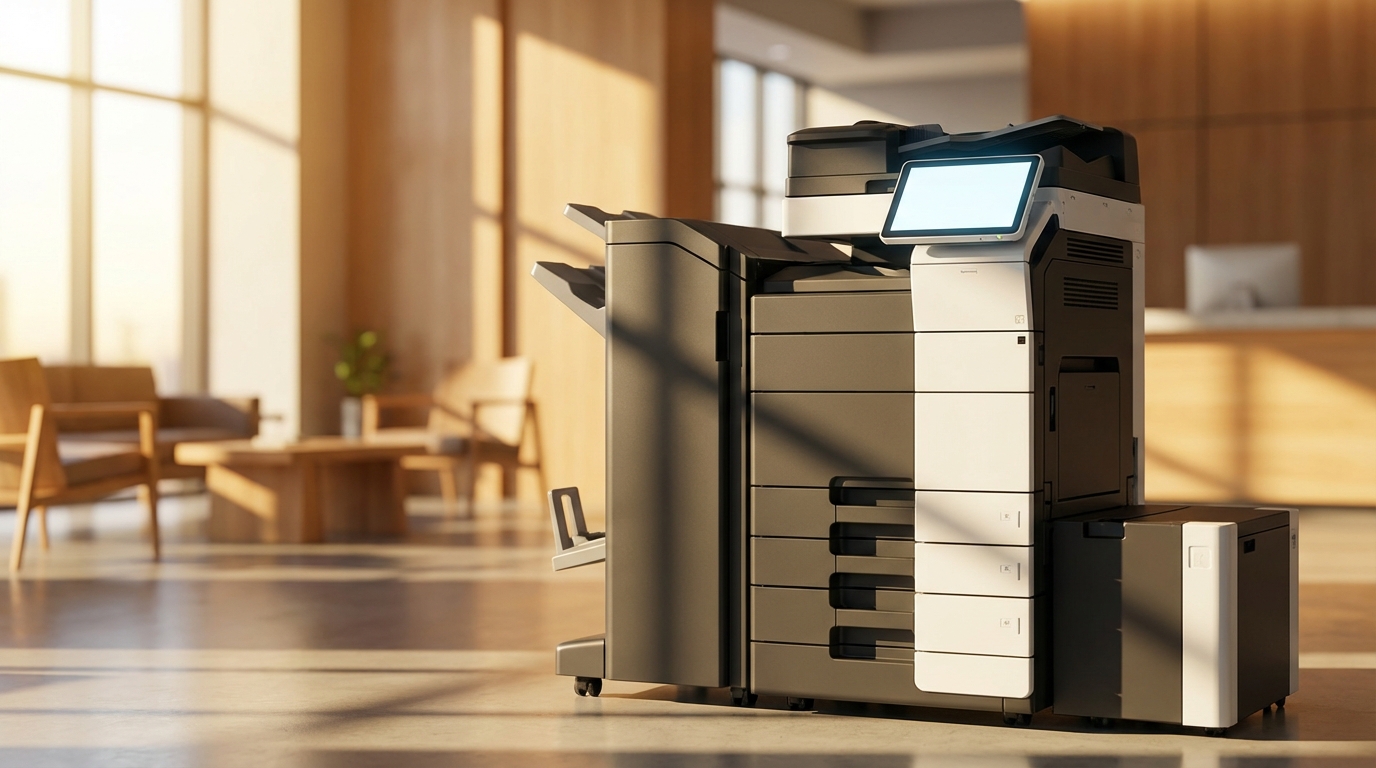
Today, the landscape of office printing is dominated by highly advanced Multifunction Printers (MFPs). Brands like Konica Minolta, Ricoh, Kyocera, Sharp, and Toshiba have transformed the humble copier into a centralized document hub capable of printing, scanning, faxing, and integrating with cloud services.
The True Cost of Modern Copying
In a modern Hong Kong office, the direct cost of copying has hit rock bottom. Thanks to high-yield toner cartridges and long-life imaging drums (a hallmark of brands like Kyocera), the actual cost of toner and paper can be as low as:
- Black and White: HK$0.03 to HK$0.08 per page
- Color: HK$0.30 to HK$0.80 per page
Hong Kong-Specific Challenges & Solutions
However, in Hong Kong, the cost of a copier isn't just about toner and paper. The unique environment of our city dictates how businesses choose their equipment:
1. The Cost of Space (Rent)
In Central or Causeway Bay, office rent can exceed HK$60 per square foot. A bulky, outdated copier taking up 10 square feet is effectively costing you HK$600 a month just in floor space! This is why compact, high-performance machines from Brother, HP, Epson, and Pantum are incredibly popular for SMEs and startups. They offer enterprise-level features without the massive footprint.
2. The Humidity Factor (回南天)
Hong Kong's spring humidity is notoriously brutal on paper. Damp paper leads to catastrophic paper jams and poor toner adhesion. Enterprise machines from FujiFilm and Canon often feature heated paper cassettes to keep paper crisp, saving businesses money on wasted paper and lost productivity.
3. Logistics and Lift Access
Delivering a massive A3 production printer into a San Po Kong industrial building with narrow doors and tiny cargo lifts is a logistical nightmare. Modern modular designs allow technicians to assemble the machine on-site, ensuring that even offices with tight access can get top-tier equipment.
4. Power Standards and Efficiency
Hong Kong operates on a 220V power grid. Modern machines are highly optimized for this, with brands like Epson championing Heat-Free inkjet technology that drastically reduces electricity consumption compared to traditional laser printers, lowering the monthly CLP or HK Electric bill.
5. The 4-Hour SLA Expectation
In Hong Kong's hyper-competitive business environment, downtime is money lost. A broken printer in a law firm or logistics hub is a crisis. Therefore, the "cost" of a copier must include a robust maintenance contract. A standard expectation in HK is a 4-hour Service Level Agreement (SLA), meaning a technician is on-site within half a day to fix the issue.
Summary: The Plunging Cost of Copying
| Era | Technology | Time to Copy 1 Page | Est. Cost per Page (Modern HKD) |
|---|---|---|---|
| 14th Century | Monk / Scribe (Handwritten) | ~4 Hours | ~ HK$ 750.00 |
| 15th Century | Gutenberg Printing Press | Minutes (after months of setup) | ~ HK$ 50.00 |
| Early 20th C. | Mimeograph / Carbon Paper | ~1 Minute | ~ HK$ 3.00 |
| 1960s | Early Xerox Machines | ~15 Seconds | ~ HK$ 0.80 |
| 2024 (Today) | Modern MFP (B&W) | < 1 Second | HK$ 0.03 - 0.08 |
Conclusion: Appreciating the Magic in the Corner of the Office
From the silent, candlelit monasteries of the Middle Ages to the humming, brightly lit office towers of Hong Kong, the evolution of document copying is a testament to human ingenuity. What once cost the equivalent of a luxury car and took half a year to produce can now be achieved for pennies in a matter of seconds.
The next time you walk up to your office printer—whether it's a heavy-duty Ricoh, a high-color Konica Minolta, or a space-saving Brother—take a moment to appreciate the centuries of innovation sitting inside that plastic casing. You possess the power of a thousand medieval scribes, available at the touch of a button.
Need Expert Advice?
Our consultants can help you find the perfect printing solution for your office.
📞 +85221164877 · King Copier · Operated by Techieasy Limited
Need Expert Advice?
Our consultants can help you find the perfect printing solution for your office.
📞 +85221164877 · King Copier · Operated by Techieasy Limited