The State of Lexmark in Hong Kong: Is It the Right Choice for Your SME in 2024?
When Hong Kong Small and Medium Enterprises (SMEs) start looking for a new office printer or copier, a few names immediately dominate the conversation. You will frequently hear about Japanese giants like FujiFilm, Canon, Ricoh, and Konica Minolta for large A3 copiers, or HP, Brother, and Epson for desktop A4 printers. However, an often-overlooked heavyweight in the industry is Lexmark.
Born from IBM's printer division in the 1990s, Lexmark has a long-standing reputation for building absolute workhorses—devices engineered for high-volume, enterprise-level environments. But in recent years, Lexmark has been making strategic shifts in the industry, focusing heavily on Cloud fleet management, IoT (Internet of Things) integration, and uncompromising cybersecurity.
For an SME operating in Hong Kong—navigating tight office spaces in Kwun Tong, battling high spring humidity, and demanding lightning-fast service—does Lexmark make sense? In this industry news deep-dive, we will analyze Lexmark's current market position, compare it to other leading brands, and provide a comprehensive cost analysis to help your business make an informed decision.
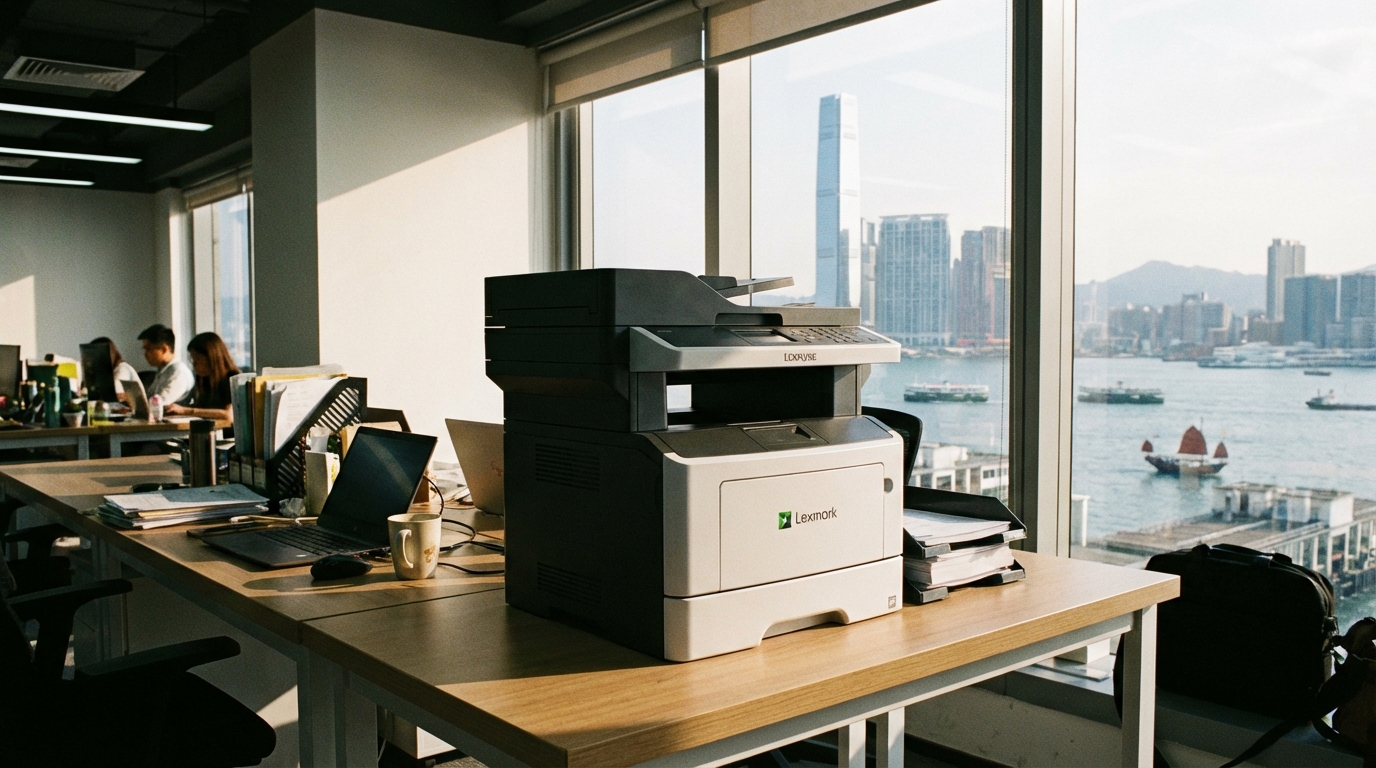
Lexmark's Position in the Hong Kong Market
To understand Lexmark's place in Hong Kong, we must first look at the local office equipment landscape. Hong Kong is traditionally an A3-centric market. Because commercial real estate is among the most expensive in the world, most SMEs prefer to lease a single, large, floor-standing A3 multifunction printer (MFP) and place it in a central corridor. Brands like Canon, Ricoh, FujiFilm (formerly Fuji Xerox), and Konica Minolta have dominated this space for decades.
Lexmark, conversely, has historically championed the distributed A4 model. Instead of one massive A3 copier for 50 employees, Lexmark's philosophy often involves deploying three or four high-performance A4 printers strategically around the office.
Recently, industry news has highlighted Lexmark's aggressive push into Managed Print Services (MPS) and cloud technology. With the launch of their Optra IoT platform, Lexmark is positioning itself not just as a hardware vendor, but as an IT solutions provider. For Hong Kong SMEs with limited in-house IT support, this means printers that can predict their own maintenance needs and automatically order toner before it runs out.
Key Strengths of Lexmark Printers for SMEs
1. Uncompromising "Secure by Design" Architecture
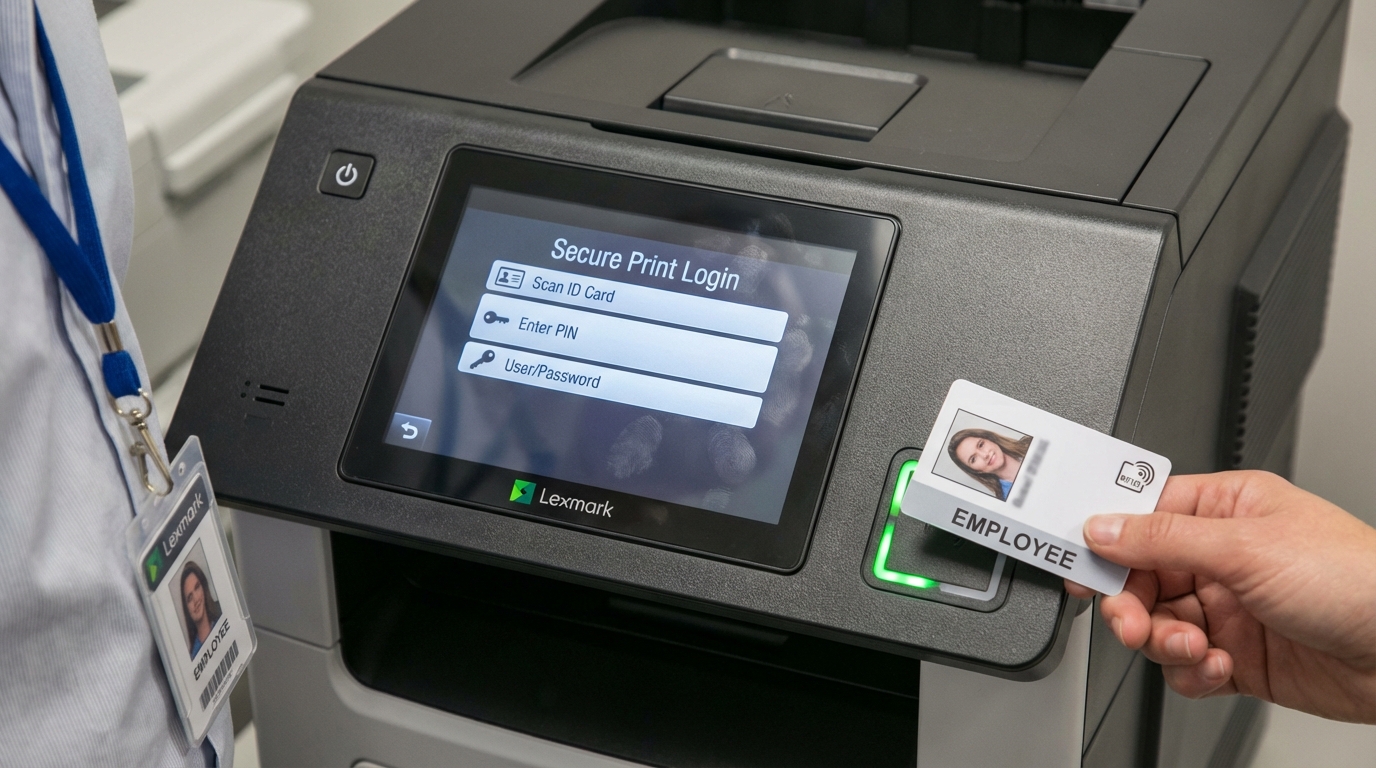
In an era where cyberattacks on Hong Kong businesses are increasing, the printer is often the weakest link in the network. Lexmark is widely recognized by industry analysts (such as IDC and Quocirca) as a leader in print security. Their devices feature built-in Trusted Platform Modules (TPM), secure boot, and continuous intrusion detection. If your SME handles sensitive legal documents, financial records, or healthcare data, Lexmark's security features rival and often surpass those of HP and Xerox.
2. Built-to-Last Durability for Hong Kong Humidity
Hong Kong's spring season brings relative humidity levels that frequently top 95%. This wreaks havoc on printer paper, causing it to curl, stick together, and jam. Many budget A4 printers rely on lightweight plastic internal components that struggle under these conditions. Lexmark printers are famous for their robust steel frames and heavy-duty paper feed rollers. They are engineered to power through damp paper much more effectively than entry-level models from Pantum or lower-end Brother machines.
3. High-Performance A4 Capabilities
If your office rarely prints on A3 paper (11x17 inches), paying a premium for an A3 copier is a waste of money and space. Lexmark's high-end A4 machines can print at speeds exceeding 50 pages per minute (ppm), matching the speed of massive A3 floor-standing models from Toshiba or Sharp, but taking up only a fraction of the desk space.
How Lexmark Compares to Other Leading Brands
When consulting with Hong Kong SMEs, we always look at the full spectrum of available brands. Here is how Lexmark stacks up against its competitors in specific categories:
| Category | Lexmark's Position | Main Competitors | The Verdict |
|---|---|---|---|
| A4 Desktop (Laser) | Premium, high-yield, high-security. | HP, Brother, Pantum | Lexmark wins on durability and security; Brother/Pantum win on initial hardware cost. |
| A3 Floor-Standing Copiers | Limited market share in HK; relies on partner rebadging. | FujiFilm, Ricoh, Canon, Konica Minolta | Japanese brands dominate this space in HK due to massive local support fleets. |
| Running Costs (Toner/Drum) | Excellent high-yield toner options, reducing Cost Per Page. | Kyocera, Epson (Inkjet) | Kyocera's long-life ceramics and Epson's Heat-Free inkjets slightly edge out Lexmark on pure running costs. |
| User Interface & Tech | Intuitive, tablet-like touchscreens with custom apps. | Sharp, Xerox | Lexmark ties with Xerox for the best app ecosystem and workflow customization. |
Hong Kong Office Considerations: Does Lexmark Fit?
Buying a printer isn't just about the spec sheet; it is about how the machine fits into your specific operational environment. Hong Kong presents unique challenges for office equipment.
Space Constraints and Lift Access
Many SMEs operate in older industrial buildings in areas like San Po Kong or Tsuen Wan. Getting a massive A3 copier into an office can sometimes be a logistical nightmare, requiring large cargo lifts or even stair-crawling services. Lexmark's high-end A4 multifunction printers offer enterprise-level speeds (40-60 ppm) but are compact enough to fit in standard passenger lifts and sit on a sturdy filing cabinet, saving precious square footage.
The Golden Rule: 4-Hour SLA
In Hong Kong's fast-paced business environment, downtime is unacceptable. The industry standard for copier maintenance is a 4-hour Service Level Agreement (SLA)—meaning a technician must be on-site within 4 hours of a reported breakdown. Brands like Canon, Ricoh, and FujiFilm have massive direct service fleets in Hong Kong to guarantee this.
Lexmark operates slightly differently in Hong Kong, often relying on a network of highly qualified authorized distributors and IT partners. While these partners are excellent, SMEs must ensure that their specific service contract explicitly guarantees a 4-hour SLA. Because Lexmark machines are highly modular, parts are often easy to swap out quickly, minimizing actual repair time.
Power Requirements
Like all electronics in Hong Kong, Lexmark devices are built for the local 220V power grid. However, because Lexmark utilizes heavy-duty fusers to melt toner onto the page at high speeds, their peak power consumption during warm-up can be significant. Ensure your office has dedicated 13A wall sockets for their larger workgroup models, avoiding power strips.
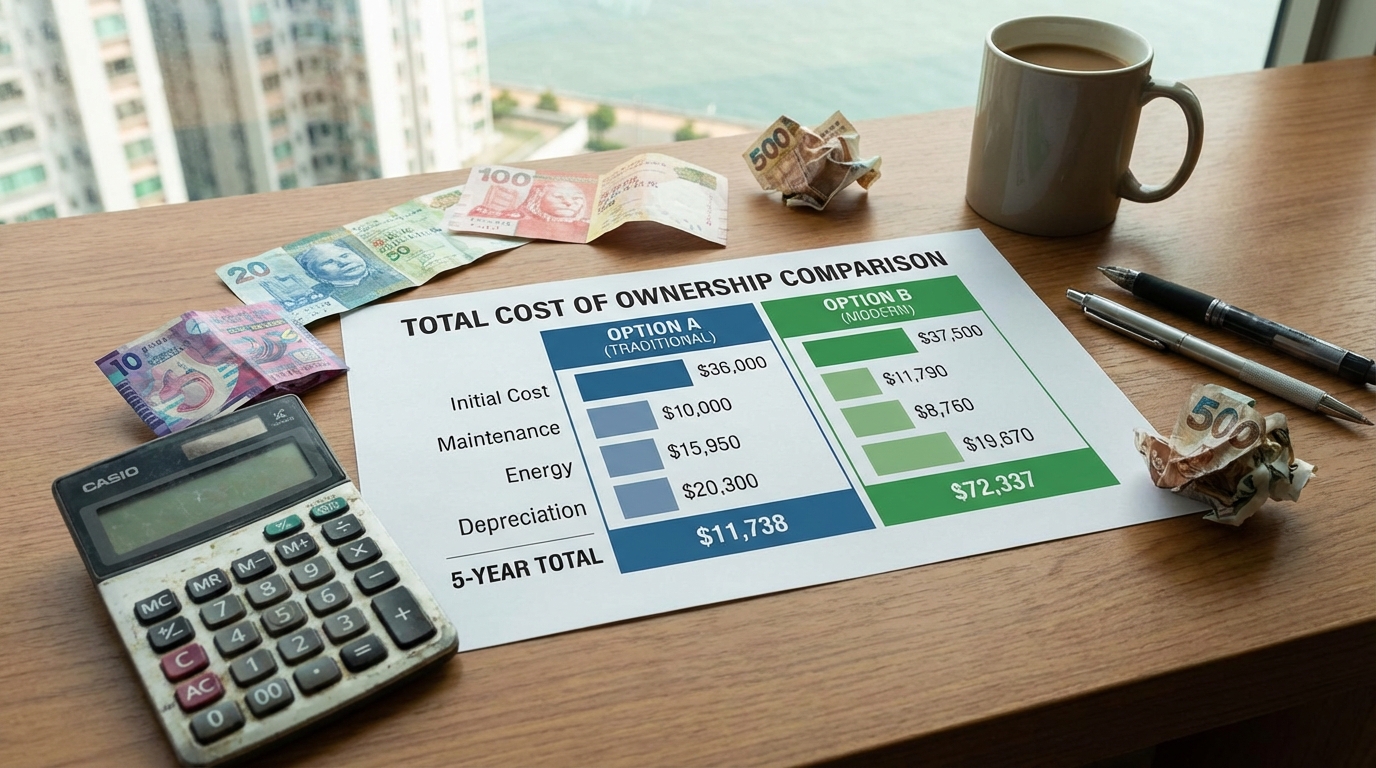
Cost Analysis: Lexmark vs. Competitors (HKD Examples)
Let's look at the financial reality of choosing Lexmark for your Hong Kong SME. Please note that prices fluctuate based on distributors, promotions, and global supply chain conditions, but these estimates provide a solid baseline.
Hardware Investment (Estimates)
- Entry-Level A4 Mono Laser: A basic Lexmark B-series printer will cost around HKD 1,800 - HKD 3,000. This competes directly with HP LaserJet Pro and Brother HL series, though Lexmark generally offers a higher monthly duty cycle.
- Mid-Tier A4 Color MFP: A Lexmark XC or CX series (ideal for a 5-10 person office) ranges from HKD 6,000 - HKD 12,000. This is where Lexmark shines, offering features usually reserved for HKD 25,000+ A3 copiers.
- Enterprise A4 MFP: High-speed, high-capacity models can range from HKD 15,000 - HKD 25,000+.
Running Costs (Toner and Maintenance)
The upfront cost of a printer is only a fraction of the Total Cost of Ownership (TCO). Lexmark operates on a "high-yield" philosophy. Their toner cartridges are often more expensive upfront compared to a brand like Pantum or Brother, but they yield significantly more pages.
For example, a high-yield Lexmark black toner might cost HKD 1,200 but print 15,000 pages, resulting in a cost per page of roughly HKD 0.08. In contrast, a cheaper printer might have a toner costing HKD 400 that only prints 2,500 pages (HKD 0.16 per page).
If your SME prints a high volume of text documents (e.g., law firms, accounting practices, logistics companies), Lexmark's TCO becomes highly competitive against HP and Canon. However, if you are looking for the absolute lowest cost per page regardless of print speed, Kyocera's ECOSYS line or Epson's WorkForce Enterprise inkjets are strong alternatives worth exploring.
SME Buyer's Checklist: Should You Invest in Lexmark?
Before signing a purchase order or a leasing agreement, run through this actionable checklist to determine if Lexmark is the right fit for your Hong Kong office:
- Do you actually need A3? Audit your print jobs from the last month. If less than 5% of your printing is on A3 size, a high-end A4 Lexmark will save you space and money compared to a FujiFilm or Ricoh A3 copier.
- Is data security a top priority? If you are handling sensitive client data, Lexmark's embedded security features and firmware integrity checks are industry-leading.
- Are you printing high volumes? Lexmark devices are built with steel frames. If you are printing upwards of 5,000 to 10,000 pages a month on an A4 machine, Lexmark will outlast cheaper plastic-framed competitors.
- Do you need complex finishing options? If your SME needs to print and automatically staple, fold, and saddle-stitch A3 marketing booklets, Lexmark is not the right choice. You should look toward Konica Minolta, Canon, or FujiFilm.
- Is your budget extremely tight? If you just need a basic printer for 50 pages a month and upfront cost is your only concern, entry-level models from Brother or Pantum will be more budget-friendly.
Conclusion: The Verdict on Lexmark for HK SMEs
Lexmark occupies a unique and highly valuable niche in the Hong Kong printer and copier market. They are not trying to be the cheapest printer on the shelf, nor are they trying to dominate the massive A3 central-copier market owned by the Japanese legacy brands.
Instead, Lexmark provides enterprise-grade power, security, and durability in a compact A4 footprint. For Hong Kong SMEs dealing with limited office space but demanding high performance and rock-solid reliability, Lexmark is an outstanding choice. Their shift toward cloud-based fleet management and IoT predictive maintenance means that even small businesses can enjoy the IT infrastructure benefits usually reserved for multinational corporations.
Ultimately, the decision comes down to your workflow. If you want to move away from the bulky, centralized A3 copier model and deploy fast, secure, and durable A4 machines across your office, Lexmark should be at the very top of your shortlist.
Need Expert Advice?
Our consultants can help you find the perfect printing solution for your office.
📞 +85221164877 · King Copier · Operated by Techieasy Limited